

Midwife Interviews
Video | Homebirth model of care with midwife Janine O’Brien
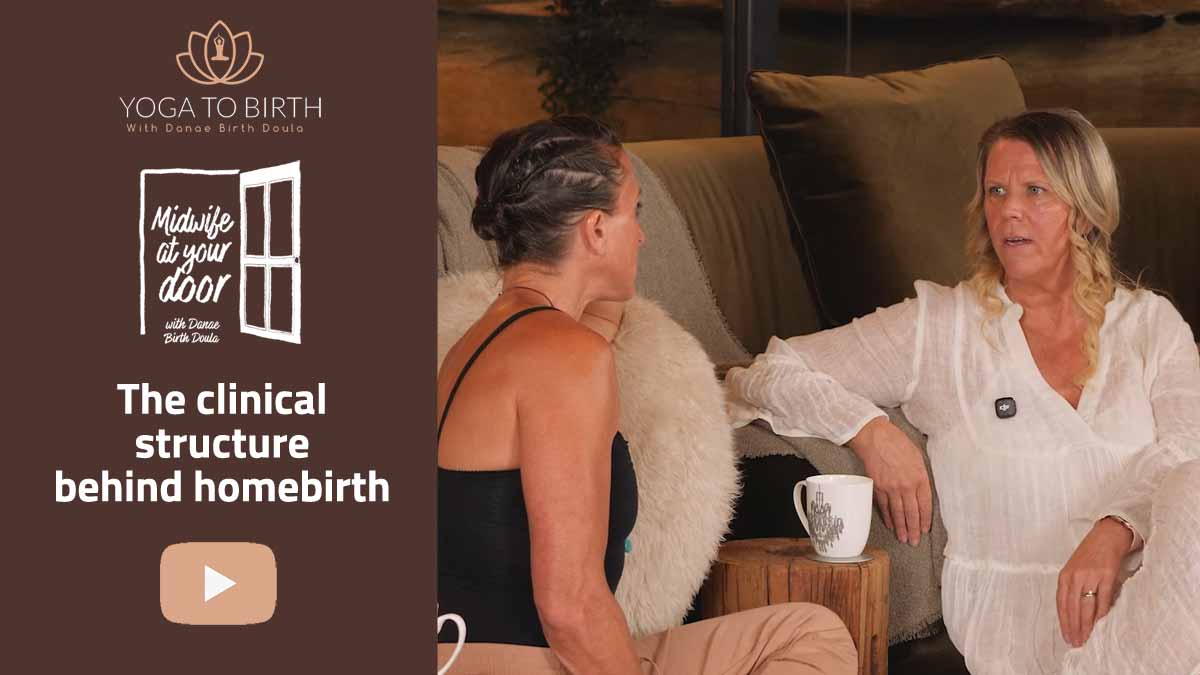
Homebirth assessment and clinical care | Midwife Interview
Understanding the professional judgement, communication and planning behind homebirth care
How do midwives assess labour at home, and what happens when a family needs additional care? In this Midwife at Your Door interview, Danae speaks with Janine O’Brien from iBirth about the clinical responsibilities that underpin homebirth midwifery.
Janine explains how ongoing assessment, professional standards and clear communication guide care. The conversation offers a practical look at how midwives support physiological birth while remaining attentive to the wellbeing of mother and baby.
Inside the Interview
Observing labour and monitoring wellbeing
Janine discusses how midwives follow the progress of labour, assess mother and baby, and recognise changes that may require further attention. She explains how clinical observations can be carried out with sensitivity to the woman’s needs and the atmosphere of the birth space.
This approach combines support for the natural processes of labour with ongoing assessment and readiness to respond.
Recognising when care needs to change
The interview considers how midwives identify when additional support, medical assessment or hospital transfer may be appropriate.
Janine describes how these decisions are discussed with families and how a transfer is coordinated when needed. Calm, clear communication helps parents understand what is happening and participate in decisions, including when circumstances change unexpectedly.
Professional responsibilities and collaboration
Training, clinical guidelines and accountability provide a framework for midwifery decisions. Janine explains how these responsibilities shape homebirth care and how midwives work with hospital teams when care moves to another setting.
The discussion shows how supporting physiological birth and recognising the need for additional care form part of the same professional role.
Building understanding and confidence
Questions about risk can influence how families feel about homebirth. Janine addresses common misconceptions and considers how preparation, trust and continuity help parents feel informed and supported.
Through this conversation, viewers gain a clearer understanding of homebirth from a midwife’s perspective, including the assessment, communication and collaboration behind individual care.
Video Transcript
So we met that change-the-world women are always the women that no one knows what to do with. And I feel like that’s you. Thanks. I feel like that’s you.
So Janine, when a woman comes into your care, how does that look? Talk us through from the beginning. Once you’ve met, she’s gone through all the questions, you’ve decided that you’re going to work together, and we can go backwards afterwards and look at the questions that typically families ask you. When you begin that journey with a woman, talk us through what that looks like.
Well, it depends if it’s your first or third or fourth baby with me, because usually if it’s someone I’ve known before, they usually call me after they’ve had sex and they’ve peed on a stick. So I’m the first person that they usually call after they tell their husband or their partner, which is really nice. Some people even plan their lovemaking around my holidays and ask if I’m going to be available. So it’s actually preconception as well, which feels strangely odd, but it’s nice to know that they want me there.
Word of mouth is often how people reach out. Usually we meet for an initial meeting because I really believe that it’s such a personal journey that you need to feel really safe, and you can usually sense that in a first meeting with someone. If I’m going to be the right person to walk with you on such an incredible journey, bringing your little people into the world while you go through this really incredible rite of passage, that connection matters.
Usually we meet first, and then I say go away, have a feel about it, talk with each other, and then get back to me. I have clinics in Bilgola and Annandale, so a lot of the antenatal care happens there. Sometimes I also visit the woman’s home in the early days of pregnancy if it works out with other women in the area that I’m already visiting.
We do everything together. We talk about hormones, relationships, family life, and everything that surrounds pregnancy. It’s not just about the medical aspects. It’s about preparing for birth and for becoming a parent. Antenatal visits allow time for conversation, education and emotional support, as well as clinical care such as checking blood pressure, measuring the baby’s growth, listening to the baby’s heartbeat and reviewing any tests or scans.
Over time the relationship develops, and that continuity of care becomes really important. By the time labour begins, the woman and her family already know the midwife well, which helps them feel calm and supported. Labour and birth are then attended by the midwife, often with a second midwife present for safety and support.
After the baby is born, care continues at home with regular postnatal visits. These visits focus on the wellbeing of both mother and baby, including feeding support, recovery, newborn checks and emotional support for the family during those early weeks.
For many families this continuity of care is one of the most valuable parts of the private midwifery model. Instead of navigating pregnancy, birth and early parenting with multiple different caregivers, families are supported by someone who knows their story and walks with them throughout the whole journey.
© 2025 Yoga to Birth. All rights reserved. No part of this video may be reproduced, distributed, or transmitted in any form or by any means without prior written permission from Yoga to Birth.