

Pregnancy and Birth Tips
‘Lift and Tuck’ for Posterior Labour
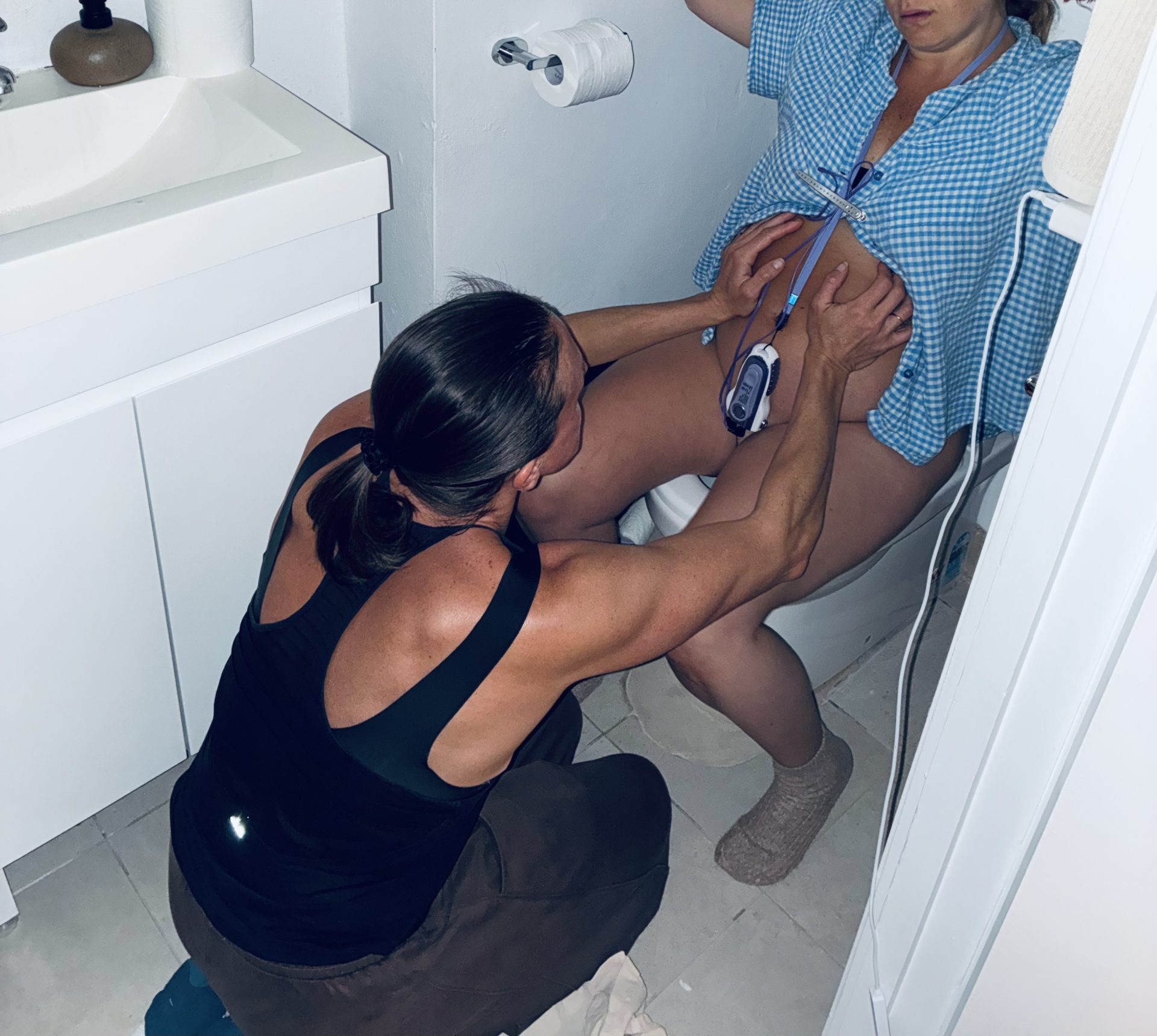
Seated Abdominal Lift and Tuck: A Gentle Tool for Posterior Labours
Back labour is one of the most exhausting experiences a woman can face. The pain often sits low in the back and doesn’t ease between surges, and labour can feel stop-start. When a baby is in a posterior position and their head is deflexed (tilted back rather than tucked), it can be harder for them to find their way down and around. A seated abdominal lift and tuck is a simple, gentle technique that can help.
What is a deflexed head?
In an ideal labour, the baby’s chin tucks toward their chest. This presents the smallest diameter of the head to the pelvis. When a baby is posterior, the head is often tilted back, so the chin sits further from the chest. That gap means a wider part of the head meets the pelvis, which can slow progress and increase back pain.
The goal: close the gap
The aim of the lift and tuck is to help close the gap between the baby’s chin and chest. By gently encouraging flexion, we invite the baby’s head into a better shape for the pelvis.
How it works
During a contraction, the uterus pushes the baby down in a particular direction. If the baby’s back is against the mother’s spine, that force can press the baby’s head into the sacrum, which can intensify back pain. Lifting and tucking the abdomen changes the angle of force in the contraction. Instead of pressing back toward the spine, the force is redirected so the baby is guided more forward and downward. Many women feel relief in their back as a result.
The technique can also create more space in the pelvis. With a better angle and a more flexed head, the baby has more room to pivot and continue the cardinal movements of labour, including descent, flexion and internal rotation.
How to do it
- Get comfortable: I think best on the toilet so that the pelvis is not restricted, knees slightly lower than your hips.
- Place your hands specific to a posterior baby: If mum doing on her own, cup them on your belly and belly button height (think I want to lift the legs and knees of baby). If partner is doing the manoeuvre, sit in front of her and place your palms in line with belly button (as shown in picture).
- Lift and tuck: As a contraction begins, gently draw or push the belly up and slightly in toward the spine, as if you’re lifting the baby up and slightly back into mums body. Hold for the length of the surge.
- Between contractions: Either hold the lift and tuck to maintain any progress made OR let it go in between whatever is best tolerated
- Repeat: Repeat for minimum 10 contractions and notice what feels helpful.
- Commit: I have sat with women for 80 contractions to move a posterior baby, don’t give up.
- Relief: Mum should experience relief in her back and that relief should continue and pressure shift as her baby rotates over time. Remember it takes time be patient.
Your hands should feel supportive, never forceful. Think of it as lifting and cradling, not pushing.
Support from your birth team
A partner or doula can help by placing their hands low on the belly and offering gentle reminders to breathe, relax and release. Combining the lift and tuck with forward-leaning positions, rocking and hip movement can make it even more effective.
Learn more
The book ‘Back Labor No More‘ by Janine McCoy King is a wonderful resource for understanding why back labour happens and for practical ways to work with it, including techniques that create space and encourage rotation. I recommend it to birth professionals who want to understand posterior labours in more depth.
A note on safety
Every labour is different. Stop if anything feels uncomfortable, and use the technique as one tool among many, not a guaranteed fix.
If you’d like to explore positions and movements that support labour, I’d love to help you prepare through Yoga to Birth and my Live Workshops